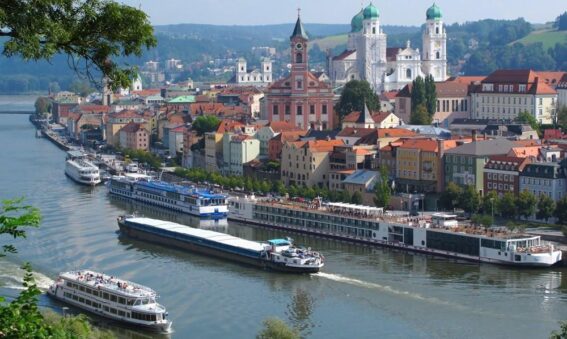
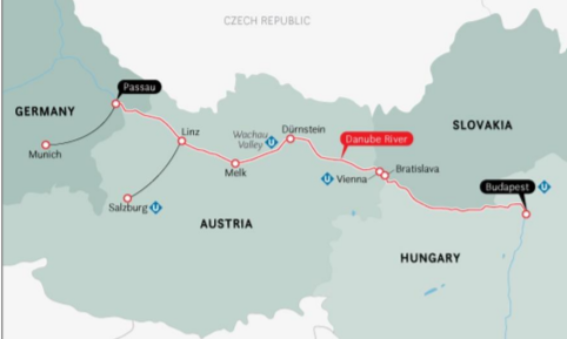
This month I continue my exploration of the countries that will be visited on the Philip Carter led cruise down the Danube River from April 20-23rd 2023 with a discussion upon the wines of Hungary. As you read through my blog, you should be able to answer the following questions by the end of the read:
1. Name the three major white grapes and three major red grapes native to Hungary.
2. Name three major wine regions of Hungary.
3. How is Tokaj Aszu made?
4. What are the four levels of Puttonyos wine?
5. What is the name of the sweetest of the Tokaji wines?
The wine industry of Hungary traces back as far as the Roman Empire and it has thrived culturally and economically for nearly 1,000 years. Tokay, its most famous wine, has been produced continuously since the sixteenth century, and Tokaj received the world’s first vineyard classification in 1700. The reputation of Hungarian wine suffered a major decline under Communist rule from 1949 to 1989. In that time, a state monopoly shifted production to bulk wine with little regard to maintaining or improving existing wine quality.
Since the fall of Communism, however, emphasis has returned to quality wines, with an influx of capital from Italian, French, and German winemakers. The introduction of Sauvignon Blanc, Chardonnay, and Pinot Gris grapes, new vineyard techniques, and modern equipment have helped rebuild Hungary’s wine industry. The famous vineyards of Tokaj received the first wave of attention, but investment has expanded throughout the country.
The main white varietals are:
Native to Hungary International
Furmint Chardonnay
Harslevelu Pinot Gris
Olaszrizling Sauvignon Blanc
The main red varietals are:
Native to Hungary International
Kadarka Cabernet Sauvignon
Kekfrankos (Blaufrankisch) Merlot
Portugieser Pinot Noir
The country has 22 wine regions, seven of which you should know along with their most important wines:
Badacsony: Olaszrizling
Eger Kekfrankos: Pinot Noir
Somolo: Furmint
Sopron: Kekfrankos
Szekszard: Kadarka, Merlot, Cabernet Sauvignon
Tokaj: Furmint, Harslevelu
Villany-Siklos: Cabernet Sauvignon, Kekfrankos
Tokaji Aszu
This wine, on par with French Sauternes and German Trockenbeerenauslese comes from Tokaj, a village in Hungary’s northeastern corner and one of the oldest wine regions in the world. Aszu refers to the dried, shriveled, botrytized grapes used to make their wines. Tokaji Aszu usually blends four grapes native to Hungary, primarily Furmint. Throughout the fall harvest season, the grapes affected by the Botrytis Cinerea mold (or aszu) are picked, lightly crushed, and made into a paste. Unaffected grapes ferment into the base wine. Workers collect the aszu paste in baskets, called puttonyos, then blend those into the base wine according to the desired sweetness, measured in puttonyos on the label of all Tokaji Aszu. The more paste buckets that go into the base wine, the sweeter the outcome. Puttonyos wine has four levels:
3 Puttonyos: 60 grams of sugar per liter
4 Puttonyos: 90 grams of sugar per liter
5 Puttonyos: 120 grams of sugar per liter
6 Puttonyos: 150 grams of sugar per liter
· A French Sauterne has 90 grams of sugar per liter
· A German Trckenbeerenauslese has 150 grams of sugar per liter
The sweetest Tokaj wines, called Essencia or Eszencia, contains 180 grams of sugar per liter. Due to the high concentration of sugar, Essencia may take years to finish fermentation and then will have only an alcohol content of 2-5 percent. It is a very unique wine and specialty of Hungary.
Make sure to be on the look out for our next blog post about the other regions that will be explored on the wine cruise!
–Dale Clemence
Assistant Wine Maker at Philip Carter Winery
Question Answers:
1. White: Furmint, Harslevelu, and Olaszrizling; Red: Kardarka, Kekfrankos, and Portugieser
2. The major wine regions of Hungary include: Badacsony, Eger, Somolo, Sopron, Szekszard, Tokaj, and Villany-Siklos
3. Grapes affected by Botrytis Cinerea are made into a paste. Unaffected grapes ferment into the base wine, and workers blend in baskets of the noble rot paste according to the desired sweetness level.
4. 3 baskets, (60g sugar/liter), 4 baskets (90g), 5 baskets (120g) and 6 baskets (150g)
5. Essencia
For more information on the Philip Carter led wine cruise that travels through Austria, Hungary and Germany please click on the link below, or e-mail WineClub@Expedia Cruises.com or call 877-651-7447.
Wine Cruise Info